Vande Bharat 2.0 Fleet Expands Indigenous Kavach 4.0 Collision Avoidance Deployment
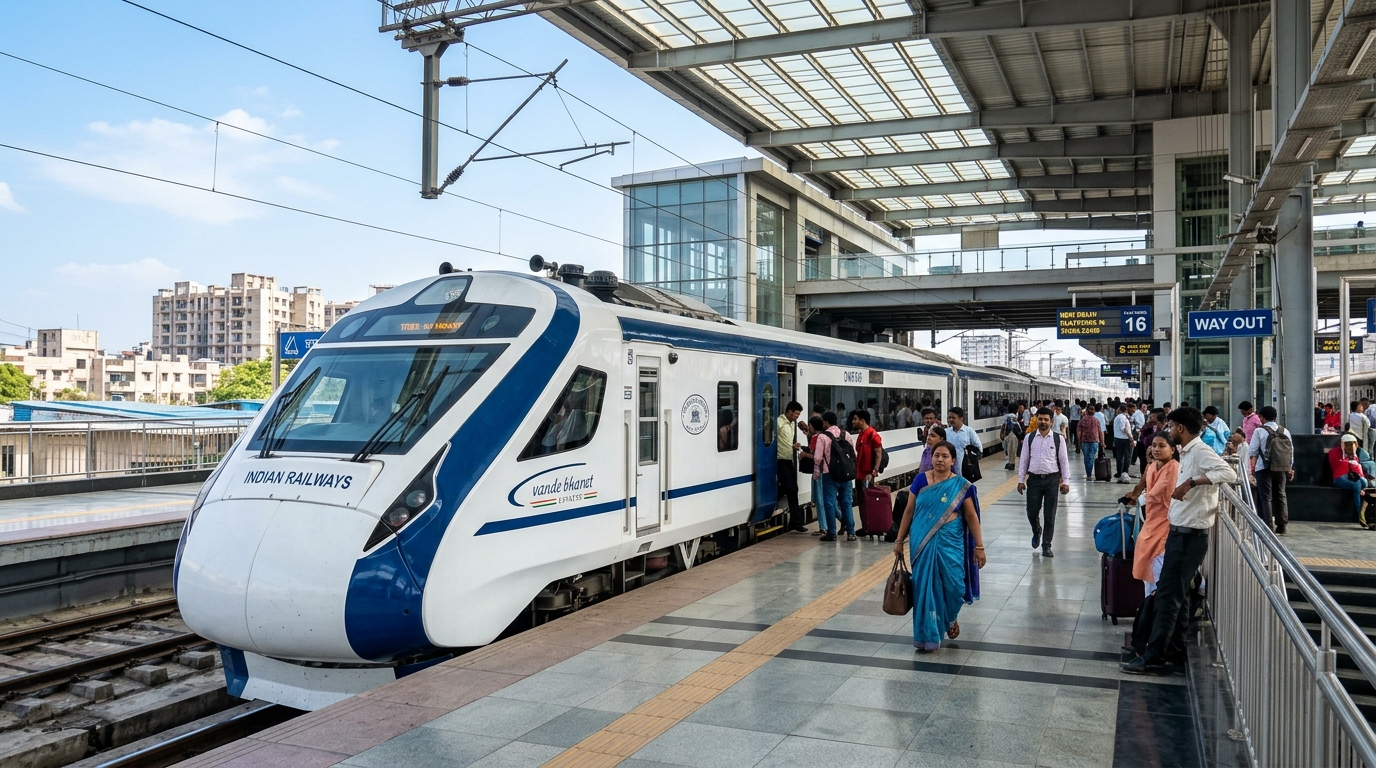
Indian Railways has initiated network-wide deployment of the Kavach 4.0 automatic train protection system across high-density passenger corridors, outfitting the growing Vande Bharat fleet with sovereign collision prevention hardware.
Kavach 4.0 utilizes UHF radio telemetry, RFID track transponders, and dual-redundant locomotive onboard computers to automatically apply brakes if an engineer fails to respond to red signal indications. The system operates autonomously during dense winter fog conditions across northern railway zones.
Sleeper variants of the semi-high-speed trainsets are completing 160 km/h trial operations on the Delhi-Mumbai and Delhi-Howrah trunk routes, featuring aerodynamically streamlined aluminum bodies and advanced passenger suspension.
"Sovereign railway automation provides the dual dividend of world-class passenger safety and industrial capacity retention within domestic manufacturing hubs."
Railway engineers emphasize that indigenous safety architecture eliminates dependence on proprietary European signaling standards, reducing per-kilometer track electrification and signaling costs by over 55%.